
The way students and employees learn is changing — and fast. Today, more people and companies are turning to short courses as a smarter way to build skills without spending years in formal education.
These courses are flexible, affordable, and focused on real-world results, making them ideal for busy professionals looking to advance their careers.
In fact, many organisations now invest in short online courses from institutions like MANCOSA skillME to train their employees and keep their teams competitive. This shift shows just how valuable these courses have become in the modern workplace.
However, despite their growing popularity, there are still many misunderstandings about online learning.
In this article, we’ll break down six common myths and reveal the truth about these online courses — so you can make confident decisions about your learning and career path.
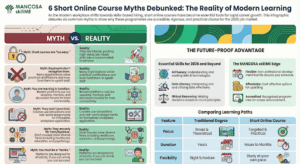
The 6 most common short online course myths debunked
Online courses are becoming increasingly popular. And it’s easy to see why. They are flexible, affordable, and designed to help people learn new skills quickly.
In today’s fast-changing job market, both individuals and companies are looking for faster ways to upskill without committing to long qualifications.
In fact, many organisations are now investing in short online programmes for employee training. According to reports, companies are shifting towards skills-based models, meaning they also need skills-based training to keep their teams competitive.
Some key employee skills for 2026 and beyond include:
- AI fluency
- Data literacy
- Complex problem solving
- Ethical reasoning
- Digital communication
This is where platforms like MANCOSA skillME come in, offering practical, career-focused courses that can be applied immediately in the workplace.
But despite their growing popularity, there are still many myths around short courses.
Let’s break them down and look at the reality.
1. Myth: Short online courses are too easy
Reality: Short courses are not “easy” — they are intense.
Because they are shorter in duration, these courses often pack a lot of valuable information into a limited time. This means you need to stay focused, manage your time well, and keep up with the work.
Plus, short courses focus on practical, job-ready skills, not just theory. This makes them highly effective, but also demanding.
The best approach is to treat your short course like a real class. Set study times each week and stick to them.
2. Myth: They lack credibility with employers
Reality: While many people wonder, “Are short online courses recognised by employers?” The truth is that employers not only recognise these courses, but value them (even sometimes over traditional qualifications).
When comparing short online courses vs traditional degrees, the main difference is not difficulty, but focus. Short courses are more targeted and practical, while degrees are broader and more theoretical.
And, in today’s job market, companies want people who can do the job, not just talk about it. Short courses show that you are proactive and willing to learn.
Many employers even pay for these courses to train their staff, which shows how much value they place on them. So, having multiple certifications can make you stand out as a motivated and capable employee.
For example, imagine two candidates. One has a degree but no updated skills. The other has a degree plus recent certifications. Employers will often choose the second candidate.
3. Myth: You are learning alone
Reality: Online learning is more connected than ever.
Modern courses include discussion forums, group projects, and live sessions where you can interact with others. You can ask questions, share ideas, and learn from peers.
Many providers also offer facilitators, mentors, and support teams to guide you throughout your course — all extremely valuable in learning difficult skills.
So even though you’re learning online, you’re not doing it alone.
4. Myth: Online learning cannot be practical
Reality: Online short courses are designed to be hands-on.
Through case studies, simulations, and real-world assignments, you learn how to apply what you’re studying immediately.
As such, these “fast education” courses help you turn knowledge into action, often while you’re still studying.
For example, a digital marketing course might ask you to create a real campaign for your business or workplace. This means you’re building skills and results at the same time.
5. Myth: They are only for business or tech
Reality: Short courses are available in almost every field.
While business and IT courses are popular, you can also find courses in healthcare, education, psychology, project management, and more. In fact, you can have a look at MANCOSA skillME’s range of short courses here:
There is a short course for almost every career path, making them accessible to a wide range of learners. So, regardless of your industry, professional development through short online courses is the way to move forward.
6. Myth: You must be a “techie” to succeed
Reality: You don’t need advanced tech skills to succeed in online learning.
Most platforms are designed to be simple and easy to use. If you can browse the internet or send emails, you already have the basic skills needed.
Plus, reputable course providers usually offer tutorials and technical support to help you get started and solve any issues.
These truths highlight the key benefits of short online courses for career advancement. Not only do these courses help you stay relevant in a fast-changing job market, but they are highly valued by employers.
What to expect when you study an online short course with MANCOSA skillME
If you’re considering a short course, you might be wondering what the experience is actually like. With MANCOSA skillME’s short online courses, you can expect a learning experience that’s flexible, practical, and designed to help you achieve real results — whether you’re studying on your own or as part of a company training programme.
MANCOSA skillME offers a variety of courses for different industries and careers.
For example:
- Business courses help you develop management, finance, and leadership skills.
- IT courses focus on areas like cybersecurity, data analytics, and AI.
- Healthcare courses offer practical knowledge in patient care and health management.
These courses are designed for busy people. You can study at your own pace, from anywhere, and at any time. This means you can continue working while improving your skills.
Another major benefit is affordability. Online short courses are a cost-effective way to gain new skills..
MANCOSA skillME also offers course bundles and flexible options, making it easier for both individuals and companies to invest in training.
Even though the courses are online, you’re not on your own. MANCOSA skillME provides access to learning resources and technical support throughout your course.
FAQs
Are short online courses worth it?
Yes, short online courses are worth it. Especially if you want to grow your skills quickly. They offer a fast, flexible, and affordable way to learn skills that are directly useful in the workplace.
One of the biggest benefits of online short courses for career advancement is that they help you stay relevant in a fast-changing job market. They also show employers that you’re proactive and committed to learning, which can make you stand out.
Can I get a job with a short-course certificate?
Absolutely. While they may not replace full qualifications, short course certificates can improve your chances of getting hired. Many employers are shifting towards skills-based hiring, which means they value what you can do.
This also answers a common question: are short online courses recognised by employers? Yes, especially when they come from trusted providers like MANCOSA skillME and focus on practical, in-demand skills.
Are short online courses accredited?
Reputable institutions, such as MANCOSA skillME, ensure their courses meet quality standards and align with industry needs.
This makes them credible and trusted by employers. When choosing a course, it’s important to look at accreditation and course outcomes. This is a key part of understanding how to choose the right short course for your goals.
How long does a short online course take?
Short courses are designed to be flexible and time-efficient. They can take anywhere from a few hours to a few weeks or months, depending on the topic and depth.
This makes them ideal for working professionals who want professional development through online short courses without disrupting their daily routine.
What kind of career boost can I expect from taking short business courses?
Short business courses can give you practical skills in areas like leadership, project management, and digital marketing. These are skills you can use immediately at work. As a result, you may see better performance, new opportunities, or even promotions.
Register for a MANCOSA skillME short online course
Short online courses are no longer just a trend. They are a powerful tool for building skills, growing your career, and staying competitive in today’s fast-moving world.
Whether you’re looking to upskill, change careers, or improve your performance at work, these courses offer a practical and flexible solution.
As we’ve seen, many of the common myths about online learning simply aren’t true. Short courses are not “easy,” they are not lacking in credibility, and they are not limited in scope. Instead, they are focused, accessible, and designed to deliver real results.
With options like MANCOSA skillME short courses, both individuals and organisations can invest in learning that’s relevant, affordable, and aligned with industry needs.