
Many people want to grow their careers, move into a new industry, or take on more responsibility at work. The challenge is that employers often look for practical experience, not just qualifications.
This can create a frustrating situation. You need experience to access new opportunities, but gaining that experience can feel difficult when you already have a full-time job and financial responsibilities.
The good news is that you do not need to quit your job to build valuable business skills. There are many ways to gain real-world experience while maintaining a steady income.
From workplace projects and mentorship opportunities to short online courses from institutions like MANCOSA skillME, small steps can make a big difference over time.
In this article, we explore why practical experience matters and how to get real-world business experience while working full-time.
Why real-world niche business experience is non-negotiable
Qualifications and business knowledge are important. However, real-world experience is often what helps people stand out in a competitive job market.
When you work on real projects, solve real problems, and interact with customers or colleagues, you develop practical skills that are difficult to learn from textbooks alone.
These experiences help build confidence and teach you how businesses operate day to day.
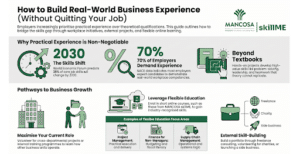
This is becoming even more important as workplaces continue to change. According to the World Economic Forum, employers expect 39% of core job skills to change by 2030, making practical, adaptable skills more valuable than ever.
Why niche industry exposure can be difficult to access
Unfortunately, gaining experience in a specific industry is not always easy.
Some people grow up around family businesses or have connections in their chosen field. Others do not.
You may be interested in marketing, technology, finance, or entrepreneurship, but have never had the opportunity to see how those industries work in practice.
This lack of exposure can make it difficult to understand industry expectations, build professional networks, or gain the experience employers often look for.
Changing careers often requires practical experience
Career changes can create another challenge.
Many professionals want to move into a new industry but still need a stable income to support themselves and their families. As a result, quitting a job to gain experience isn’t always a realistic option.
This is where part-time projects, mentorships, internships, and workplace learning opportunities can be valuable. They allow individuals to gain experience while continuing to earn an income.
Practical experience helps build industry-relevant skills
Hands-on experience helps to develop skills that employers value highly, including:
- Problem-solving
- Teamwork
- Leadership
- Communication
- Workplace systems
Employers place significant value on career readiness and practical workplace competencies when hiring new talent. In fact, NACE data shows that nearly 70% of employers expect graduates to have some form of real-world experience before entering the workforce.
So, learning these skills can be excellent for both employers and employees.
8 Ways to gain business experience without leaving your job
Many professionals wonder how to get real-world experience while working full-time. The good news is that building valuable skills doesn’t always require a career change. In many cases, you can gain practical experience while keeping the security of your current income.
Here are eight practical ways to gain experience in your chosen field.
1. Take on cross-departmental projects
Look for opportunities to work with teams outside your usual role.
For example, someone in administration could volunteer to assist with a marketing campaign or customer service project. This exposure helps you understand different parts of the business and develop transferable skills.
It’s a good idea to let your manager know you’re interested in learning new skills. Many project opportunities are offered to employees who show initiative.
2. Study part-time or online
Flexible online programmes make it easier than ever to gain industry knowledge while working.
According to the World Economic Forum, 59% of workers will need training or reskilling by 2030 to keep pace with workplace changes.
Part-time study allows you to learn new concepts and apply them directly in your current role.
3. Pursue freelance or consulting opportunities
Freelance projects can provide hands-on experience in your desired industry.
Whether you want to move into digital marketing, finance, IT, or project management, small projects help you build a portfolio and gain confidence.
Even a few hours per week can provide valuable experience that strengthens your CV.
4. Join mentorship or job shadowing programmes
Learning from experienced professionals can accelerate your growth.
A mentor can offer:
- Career advice
- Share industry insights
- And help you avoid common mistakes
Job shadowing also allows you to see how professionals handle real workplace challenges.
5. Volunteer your skills
Community organisations, charities, and small businesses often need support. You could help with social media management, event planning, budgeting, or administration.
These opportunities provide practical experience while allowing you to contribute to a meaningful cause.
6. Participate in workplace training
Some businesses offer internal learning opportunities to help build their employees’ skills. Many workers value this above all. In fact, research shows that millennials value the opportunity to learn and grow in their job above all other considerations.
Leadership programmes, digital skills workshops, and professional development courses can help you build expertise fast.
This is one of the best ways to gain business skills without quitting your job. You can have a look at short business courses from institutions like MANCOSA skillME to learn these skills.
7. Build industry experience through networking
Networking is about learning, not just job hunting.
Industry events, webinars, and professional associations give you access to experts and peers who can share valuable knowledge and opportunities.
Many career opportunities begin through professional relationships rather than formal job applications.
8. Launch a small side business or passion project
Starting a side project can be one of the fastest ways to gain practical experience.
Imagine a teacher who wants to move into digital marketing. They could start a small blog, create educational content online, or offer freelance services after hours.
Over time, they would develop skills in marketing, customer communication, content creation, budgeting, and business planning.
Where MANCOSA skillME short online courses come in
If you want to build real-world experience while working full-time, continuous learning can help you get there faster.
MANCOSA skillME offers a range of short online business courses designed to help professionals develop practical, workplace-ready skills without putting their careers on hold.
Courses are fully online, self-paced, and designed to fit around busy schedules, making them ideal for working professionals.
The business course range covers topics such as the following:
- Project management
- Finance for non-finance managers
- Leadership
- Communication
- Supply chain management
- English literacy
- And more
Learners can apply new knowledge directly in their current roles, freelance projects, side businesses, or career transition plans.
Another advantage is affordability and flexibility. Many courses can be completed within days or weeks and include interactive learning content and certificates of completion.
To explore available options, visit the MANCOSA skillME business courses page.
FAQs
How can I get real-world business experience while working full-time?
There are many ways to get real-world experience while working full-time. You could:
- Volunteer for cross-department projects
- Take on freelance work after hours
- Join a mentorship programme
- Or start a small side business
These opportunities allow you to build practical skills, expand your network, and gain industry exposure without giving up the security of your current job.
What are the best ways to gain business skills without quitting your job?
Some of the best ways to gain business skills without quitting your job include:
- Studying part-time
- Completing short online courses
- Attending industry events
- And participating in workplace training programmes
These options help you develop valuable skills while continuing to earn an income and grow within your current role.
Can short online courses count as relevant business experience?
Short online courses don’t entirely replace hands-on experience. However, they demonstrate initiative and help you develop skills that can be applied in real business environments.
How to pivot to a business career without leaving my current employer?
Start by looking for growth opportunities within your organisation. You can volunteer for new projects and connect with colleagues in departments that interest you. This allows you to gain relevant experience while keeping your job and income.
What is the fastest way to gain business experience?
The fastest way to gain experience is by doing. In other words, you need to take action and learn as you go. Combining these activities with a focused business short course can accelerate your learning even further.
Register for a MANCOSA skillME business course
Building real-world business experience doesn’t have to mean quitting your job or taking major financial risks. With the right approach, you can develop valuable skills while continuing to earn an income and grow your career in business.
If you’re looking for a flexible way to gain industry-relevant knowledge, MANCOSA skillME’s short courses can help you develop practical business skills while balancing your work and personal commitments.
The sooner you start building experience, the sooner you can move closer to your long-term career goals.